
Macquarie Technology Group secures land for $3b Sydney data centre
Originally published by the Australian Financial Review
By Jenny Wiggins, Senior reporter
Macquarie Data Centres has secured more than eight acres of land to build a new $3 billion campus on Sydney’s north shore as its boss, David Hirst, defended a surge in developments, arguing data centres are critical national infrastructure.
The company, which is owned by ASX-listed Macquarie Technology, will file a development application for a new 200-megawatt campus in the suburb of Macquarie Park after buying 34,200 square metres of land for $240 million.
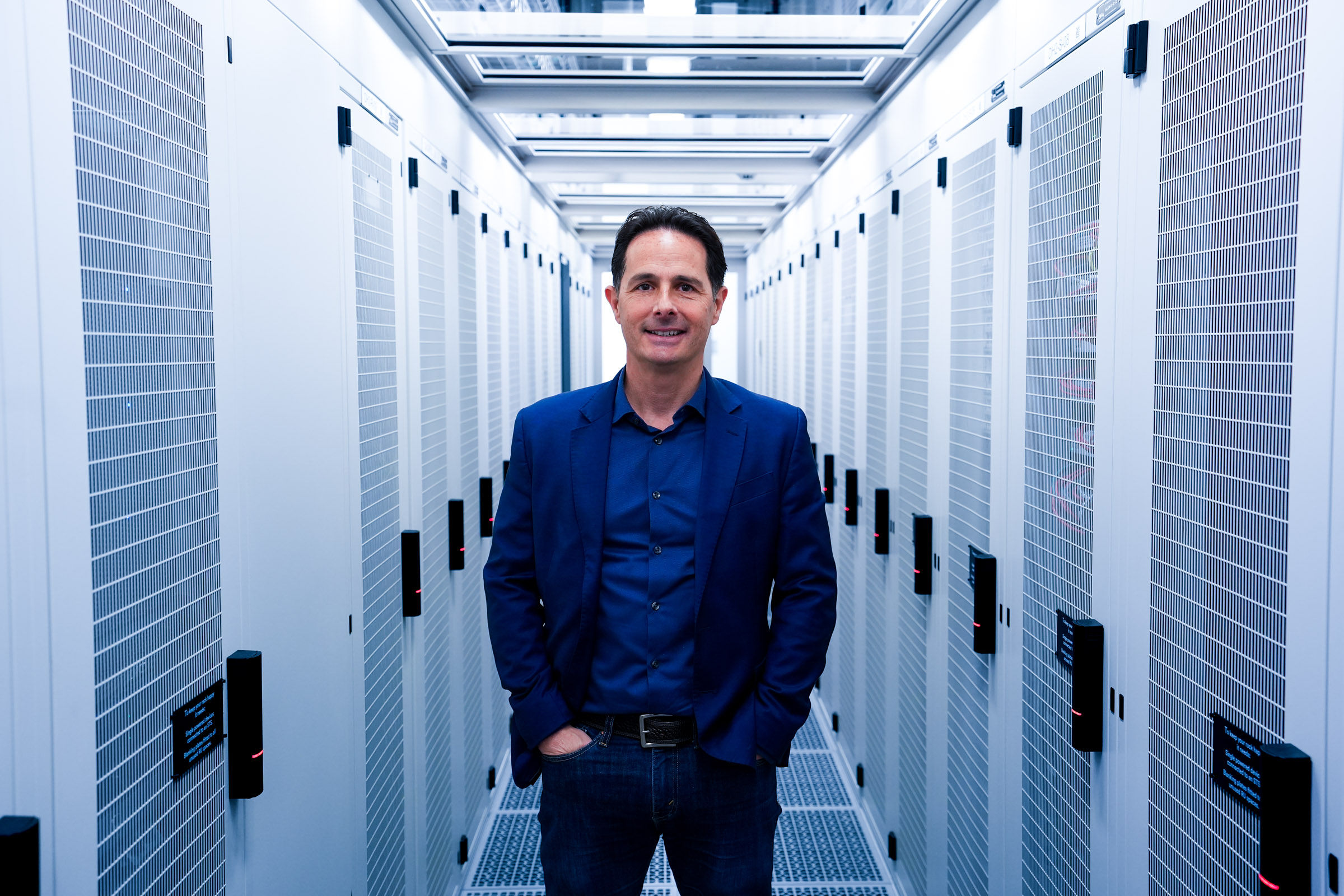
The proposed new 200-megawatt site will be Macquarie Data Centre chief executive David Hirst’s biggest project so far.
“The modern world doesn’t run without compute infrastructure,” Hirst said. “The most responsible place for it to be is inside a data centre.”
The proposed new site will join another 39 data centre projects already under way in NSW, where the state government is grappling with how to manage rising demand for power and water supplies.
The federal government plans to legislate new national rules next year governing where big data centres are built and how they use power and water, including a requirement that they become “net generators” of energy.
Asked whether he was worried that rising community opposition to some data centres, which has forced some proposals to be pulled, would slow down development, Hirst said such facilities protected citizens’ data.
“All those applications that we use today, if we don’t put them inside sovereign Australian data centres today, then they’ll be consumed or built offshore, and then we have no control.”

Macquarie Data Centre wants to put an outdoor art gallery on the proposed data centre site. (Artist’s impression)
The new site will be within walking distance of an existing 30,000-square-metre data centre campus at Macquarie Park that will reach a capacity of 65 megawatts when a current development, IC3 Super West, is finished by the end of the year.
Macquarie Technology, which has no connection with the financial services multinational Macquarie Group, has previously flagged development costs between $2.5 billion and $3 billion, excluding land costs.
It is considering selling majority stakes in its existing data centres to pay for development, with construction due to be completed in late 2029 if planning approvals are received. It may also team up with a development partner.
Macquarie Technology, which also sells cloud, cybersecurity and telecommunications services, has not yet signed up any customers for the 200-megawatt site. It will first submit a development application, arrange community consultations and organise connections to the electricity grid to provide baseload power.
The company’s existing centres in Macquarie Park are mostly used by organisations such as hospitals, banks and governments that require data processing services with minimal time delays, known as “low latency”. But the new data centre could also be used to train artificial intelligence models.
The federal government, which has been considering whether developers should be required to pay money into funds for local communities, has been urging them to ensure new data centres benefit communities.
The data centre site will include a community park at least one acre in size, and an outdoor art gallery. Part of the site will be dedicated to labs for Macquarie University, which already has a research partnership with Macquarie Technology.
Land purchase costs will be paid out of existing cash and debt facilities. Macquarie Technology signed an option to buy the land a year ago, when it flagged it could build data centres with a capacity of at least 150 megawatts.
It operates two data centres in Canberra and four in Sydney – one in the central business district and three at Macquarie Park – giving it a total capacity of 68 megawatts when the current IC3 Super West expansion is finished.
Data centres are becoming a bigger part of Macquarie Technology’s total income, contributing around one-third of its $58 million in group earnings before interest, taxation, depreciation and amortisation in the six months to December 31.