
AI Data Centre Certifications: A Guide for Australian Buyers
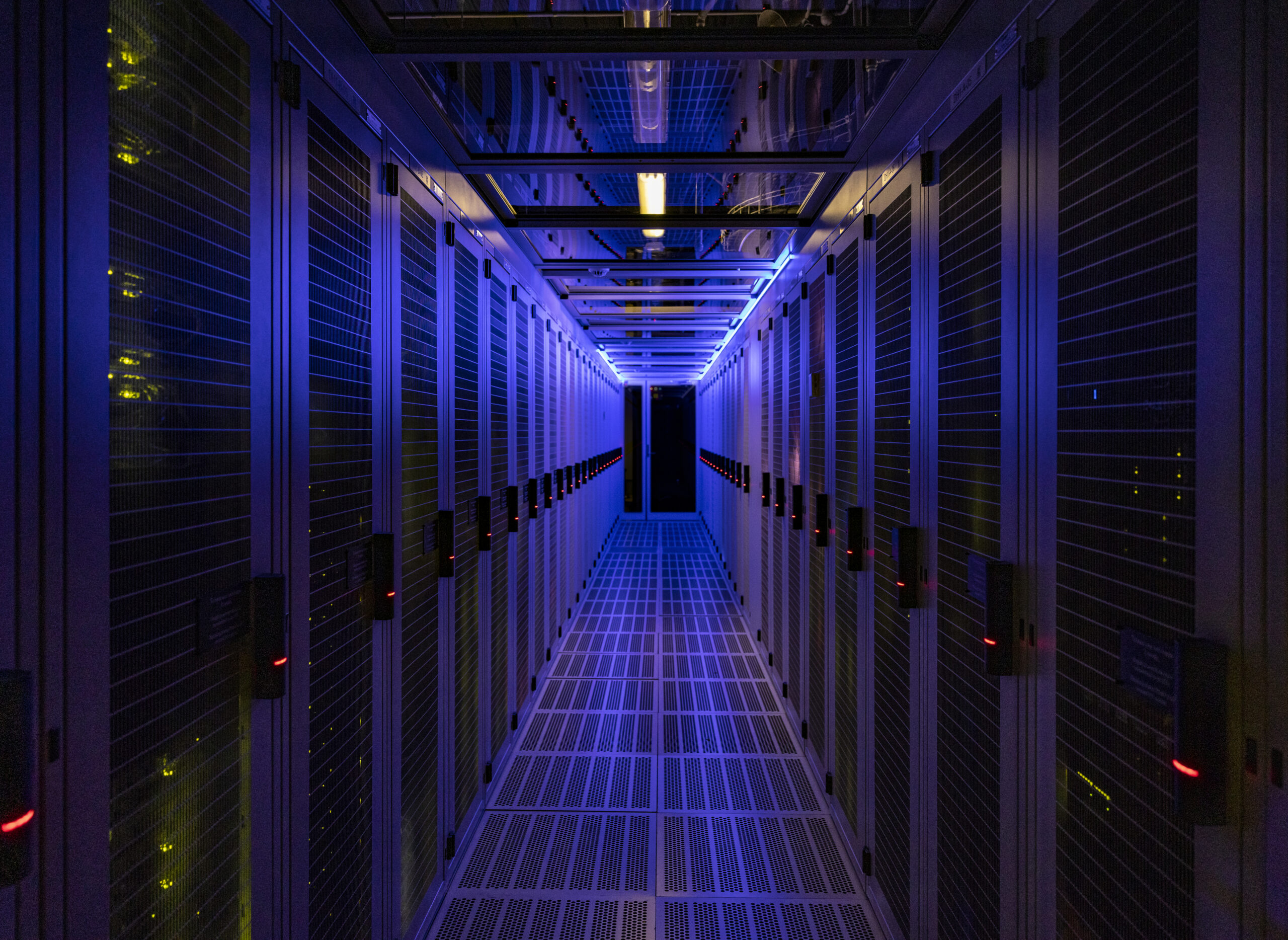
As AI gets increasingly demanding, organisations are moving into purpose-built data centres that can deliver the connectivity and security these workloads require.
While this makes it easier to scale AI, switching to a data centre also means placing your trust in another organisation to protect the environment your workloads depend on. As such, you need to be confident the provider can manage the risk.
The best place to begin is with a data centre’s certifications. These credentials are clear proof of a provider’s claims, and they help you understand whether the facility is a good fit for your use case.
This guide will help you identify what each data centre credential means and determine which matters the most for your AI workload.
Key takeaways
- No single certification proves a data centre is AI-ready. The right combination of certifications will depend on your workload and data.
- ISO 27001 stands as the recognised security baseline, but it doesn’t reveal everything. Seek additional credentials for resilience, sovereignty, and sustainability.
- Certifications don’t prove AI-ready power. Ask for current evidence that the facility can support your planned hardware.
What you’ll learn
- The four layers of AI data centre assurance
- Security and compliance: The global baseline
- Sovereignty: What makes Australian assurance distinct
- Resilience: Understanding uptime requirements
- Sustainability and efficiency: Proving performance
- What actually proves AI readiness?
- Which data centre certifications do you need?
- Choose an AI data centre that can back up its claims
The four layers of AI data centre assurance
Data centre providers often hold dozens of certifications, assessments, ratings, and memberships, all of which offer a different form of assurance.
The best way to understand credentials is to group them into one of four categories. Each layer answers a different question about whether the provider is a good fit for your workload:
The four layers of AI data centre assurance
| Category | What it helps you assess | Relevant credentials |
| Security and compliance | Whether the provider can protect your data, manage security risks, respond to incidents, and support your compliance obligations | ISO 27001SOC 1 and SOC 2PCI DSS |
| Sovereignty and government | Whether the provider’s ownership, access control, and hosting arrangements meet your sovereignty and government data requirements | IRAP assessmentsHCFSCECDISP |
| Resilience and uptime | Whether maintenance, equipment failure, or disruption could take your workload offline and how quickly normal service can be restored | Uptime Institute Tier Certifications |
| Sustainability and efficiency | How efficiently the facility uses energy, manages its environmental footprint, and meets any sustainability requirements relevant to your business | NABERSPUEISO 14001 |
These layers complement each other, but they aren’t interchangeable. A facility can demonstrate robust operational resilience while falling short of the data sovereignty requirements demanded by sensitive Australian Government workloads.
At the same time, your provider doesn’t necessarily need every credential listed here. The right combination depends on the data you handle, the government regulations you must adhere to, the impact an outage would have on your organisation, and your sustainability goals. Let’s take each layer in turn and show what it demonstrates and when it matters.
Security and compliance: The global baseline
The security layer examines how a data centre provider protects information, manages risk, and maintains the controls that surround its service. There are three key credentials here:
- ISO/IEC 27001 is the internationally recognised baseline for information security management. This security certification shows that the provider has a formal system for identifying, managing, and reducing security risks. Learn more about ISO/IEC 27001.
- SOC 1 and SOC 2 are independent reports issued following an audit. SOC 1 focuses on the controls that affect financial reporting. SOC 2 examines how providers protect customer data. These are auditor attestations, not official certifications. Learn more.
- PCI DSS provides assurance that a data centre can protect payment card data. This isn’t a universal requirement. Only make it a priority if your AI workload will store, process, transmit, or otherwise impact payment card data. Explore PCI DSS.
Operators might also hold ISO 9001 as assurance of consistent service quality or ISO 45001 as assurance that they manage workplace health and safety risks. These can be useful indicators of operating standards, but they don’t validate information security.
Sovereignty: What makes Australian assurance distinct
ISO 27001 and SOC provide a strong baseline, but their global scope means they don’t reflect Australia’s unique security and sovereignty requirements.
Sovereignty encompasses more than data residency in Australia. Data stored in Sydney can still raise questions if an overseas organisation controls the facility or remote teams have access to critical operations. As such, organisations need visibility into who owns, operates, and can access the infrastructure.
Four primary credentials help Australian buyers assess these risks:
IRAP reviews systems against government security requirements
An IRAP assessment indicates that one or more of a provider’s systems has been reviewed by an ASD-endorsed cybersecurity professional. The assessment adheres to the ACSC’s Information Security Manual (ISM) and the Protective Security Policy Framework (PSPF).
Following the evaluation, the assessor will produce a report outlining the security risks identified and any recommended improvements. Note that it isn’t a pass-fail certification and doesn’t equate to government endorsement.
For government-facing cloud and hosting services, IRAP assessments are often relevant to systems handling sensitive information or operating at the PROTECTED classification level. The exact scope should always be confirmed. Learn more about IRAP assessments.
HCF certifies providers for government hosting
The Hosting Certification Framework (HCF) assesses data centre providers against enhanced privacy, sovereignty, and security requirements. It’s a formal certification that applies to providers delivering infrastructure hosting services directly to Australian Government customers.
The HCF uses three levels to help government buyers match providers to their workload risk. Explore the HCF levels.
The three core Hosting Certification Framework (HCF) Levels
| HCF Level | What it indicates | When it may be suitable |
| Certified Strategic | The highest level, only available for providers that allow the Australian Government to specify ownership and control conditions | Higher-risk workloads |
| Certified Assured | The provider offers strong controls and has safeguards in place for ownership changes, but offers less direct government control | Lower-risk sensitive data |
| Uncertified | The provider hasn’t received HCF certification and offers minimal protection under the framework | Non-sensitive government data |
The HCF is currently undergoing reform. New registrations and supplementary assessments have been paused since 3 November 2025, but existing certified providers are unaffected. Government buyers should still confirm the current HCF status during procurement.
SCEC and DISP cover specialist government work
SCEC provides assurance that a facility meets Australian Government physical security requirements. DISP membership shows that a provider has been vetted to support Defence work and meets the security obligations attached to relevant contracts.
Neither is a universal requirement. Confirm whether your workload or contract calls for them.
Resilience: Understanding uptime requirements
The Uptime Institute Tier classification system is the global benchmark for evaluating data centre redundancy and fault tolerance. It includes four levels:
- Tier I: Provides basic capacity, but maintenance may interrupt operations
- Tier II: Adds redundant power and cooling components to reduce disruption risk
- Tier III: Allows maintenance without taking critical IT offline
- Tier IV: Withstands a single infrastructure failure without disrupting operations
The right level depends on the consequences of downtime for your organisation. Tier III suits workloads that need to remain online during maintenance, while Tier IV adds protection where even one infrastructure failure would be unacceptable.
Check what has actually been certified. A Tier design certification validates the plans, not the finished facility or how it operates. Explore the Uptime Institute Tier system.
Sustainability and efficiency: Proving performance
AI workloads concentrate more compute into each rack, increasing energy demands and the cooling needed to remove heat. Buyers need evidence that the provider is efficient to keep operating costs and emissions manageable at scale.
NABERS Energy for Data Centres
NABERS Energy for Data Centres rates operational efficiency from one to six stars using actual performance data. The rating is based on Power Usage Effectiveness (PUE), with a lower PUE indicating greater efficiency. Learn about NABERS.
As of 1 July 2025, Commonwealth data centre facilities sourced outside of the whole-of-Australian-Government panel must maintain a five-star NABERS Energy Rating or an equivalent rating, such as a PUE of 1.4 or less.
ISO 14001
While NABERS is the primary benchmark for operational energy efficiency, ISO 14001 can also provide supporting evidence that a provider systematically manages its wider environmental impact. Learn about ISO 14001.
Australia’s National Expectations
Released on 23 March 2026, the National Expectations ask data centre and AI infrastructure developers to prioritise the national interest, support the energy transition, use water sustainably, invest in Australian skills and jobs, and strengthen local research and capability.
While not a certification or law, aligned proposals receive priority in Commonwealth regulatory assessments.
What actually proves AI readiness?
There’s currently no single, recognised certification that proves an entire data centre is AI-ready. Buyers need to combine the assurance above with concrete evidence that the facility can support the power density and cooling demands of their specific hardware. Look for:
- High-density power: Confirm the facility can meet your required power per rack, with enough room to scale as required.
- Advanced cooling: Check that its cooling system supports your hardware and planned rack density.
- Resilience: Verify that power and cooling can continue through maintenance or equipment failures.
- Efficiency: Request the facility’s current NABERS rating and PUE rather than relying on the provider’s published sustainability targets.
Some vendors offer ‘AI-ready’ or ‘high-density readiness’ programs. These can be eye-catching, but they aren’t a replacement for formal certifications.
Which data centre certifications do you need?
ISO 27001 is the globally recognisable framework for ISMS. It shows the provider has a formal, independently certified system for managing security risks. Treat that as the baseline certification when sifting through providers.
Beyond ISO 27001, the additional credentials worth seeking out will depend on your workload. The table below shows what to prioritise:
Australian data centre certifications based on workload
| If your workload… | Prioritise |
| Handles Australian Government or PROTECTED data | HCF, IRAP, SCEC, DISP |
| Handles customer or personal data | SOC 2, data residency, access transparency |
| Affects financial reporting or payment systems | SOC 1 and PCI DSS |
| Could cause serious disruption if it goes offline | The appropriate Uptime Institute Tier |
| Must meet sustainability or procurement requirements | NABERS, PUE, ISO 14001 |
| Runs high-density AI training or inference | Rack density, power, and cooling evidence |
Most AI workloads will fall into more than one row, so you should combine the relevant requirements as needed rather than choosing a single credential. From there, check that the scope of the credential covers the data centre and service that will host your workload.
Choose an AI data centre that can back up its claims
An AI data centre investment decision is about more than available space and compute power. Certifications will help you decide who you can trust with the AI workloads that will directly impact your business and customer outcomes.
For that level of confidence, you need a provider that can back up what it promises. Macquarie Data Centres is Australian-owned and a Certified Strategic hosting provider. We operate Tier III-certified facilities that are supported around the clock by more than 200 government-cleared engineers.
Explore our certifications and compliance standards, or speak to our team to find the right home for your digital infrastructure.
FAQs
What is an AI data centre?
An AI data centre is a facility equipped to run compute-intensive AI training and inference workloads. It combines high-density power and high-speed connectivity with cooling infrastructure designed to handle the heat generated by GPU-heavy systems.
Is there a single AI data centre certification in Australia?
There’s currently no recognised certification that covers every aspect of AI readiness. Buyers need a combination of certifications and technical standards covering security, sovereignty, resilience, efficiency, power, and cooling. Each has different scopes and auditor requirements. Confirm exactly which facility and services were assessed.
Is NABERS mandatory for Australian data centres?
Not universally, but Commonwealth data centre facilities sourced outside the whole-of-Australian-Government panel must achieve and maintain a 5-star NABERS Energy rating or an equivalent rating, such as a PUE of 1.4 or less. Other buyers may also make NABERS part of their environmental compliance or procurement requirements. A high NABERS rating doesn’t automatically mean a facility is carbon neutral.